

What does PhD graduation mean?
For EIT’s first cohort of jointly trained PhD graduates, it marks a transformation from “test‑takers” to “problem‑setters”. Taking on new roles such as associate professors, research fellows and engineers, they step onto the real frontiers of innovation.
Their destinations range from national laboratories tackling core technological bottlenecks, leading tech platforms addressing industrial pain points, to university podiums for teaching and mentoring.
Today, let us meet these pioneers heading to the “frontlines” and hear their stories with EIT.
Liang Xu
Dedication in action, making AI more human‑centric
PhD Research Focus:
Human‑centered motion and interaction generation
Next Destination:
Zhongguancun Institute in Beijing, Research Fellow / PhD Supervisor
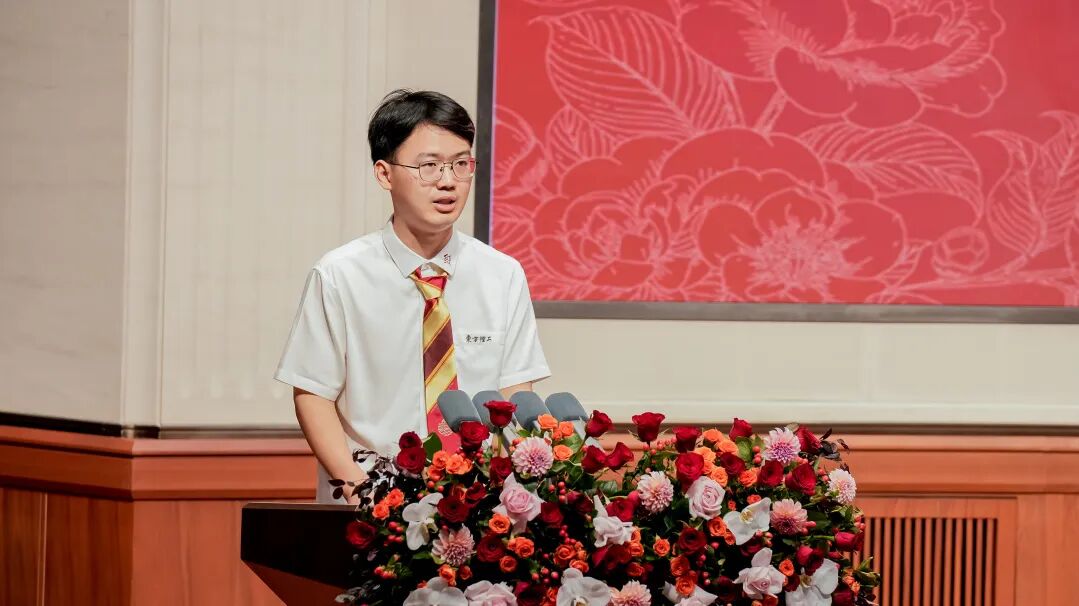
My work is to teach AI to understand and generate natural, lifelike human motions and interactions.
The perception, understanding and generation of human‑centered motions and interactions formed the research topic of Liang Xu during his PhD studies.
His connection with EIT began with his trust in and decision to follow Wenjun Zeng, Vice President of Eastern Institute of Technology and Foreign Member of the Canadian Academy of Engineering. As a witness to EIT’s preparatory construction, he watched the campus rise from the ground. The university in turn provided him with solid backing, allowing him to explore the boundaries of scientific research without distractions.
Perseverance, pioneering and steadfast practice — these are the words Liang Xu uses to sum up his PhD journey. When he learned he had won the National Scholarship for Doctoral Students, he felt all his persistence had paid off. “This is not merely an honor. It is conclusive recognition of my years of round‑the‑clock research and relentless experimentation. It makes every bit worthwhile.”
Now Liang Xu has joined Zhongguancun Institute in Beijing as a Research Fellow. He continues to delve into human‑centered vision and interaction challenges. He aims to expand into interdisciplinary fields including embodied intelligence and medical rehabilitation, hoping his research can tangibly improve people’s lives.
“Keep inner peace. Do not blindly chase short‑term foci. Build your core technological system with solid efforts,” shared Liang Xu. “Time will ultimately reward those who settle down to in‑depth research and uphold the spirit of steadfast practice.”
Lishu Duan
Settling down to listen to the voice of the deep sea
PhD Research Focus:
Computational Acoustics and Fluid‑Structure Interaction
Next Destination:
Hanjiang Laboratory, Assistant Research Fellow
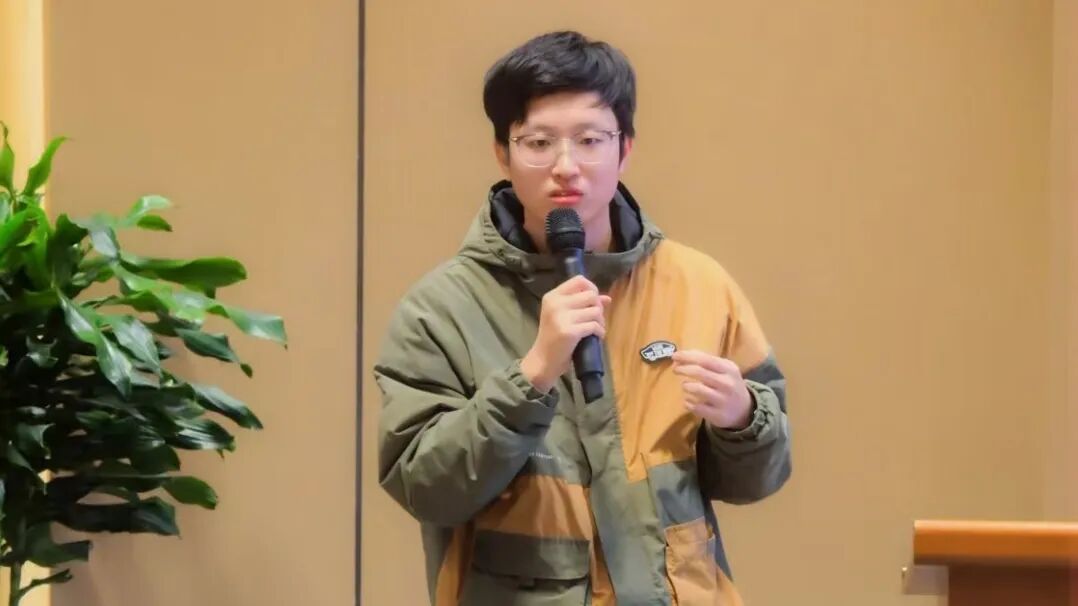
Lishu Duan’s PhD journey unfolded alongside EIT’s rapid growth. As one of the first cohort of jointly trained doctoral students, he personally experienced the university’s continuous improvement from its early construction phase. Meanwhile, he himself transformed from a student who merely “fulfills assigned tasks” into a researcher capable of “raising research questions”.
“In the beginning, I mostly focused on whether the code could run. As my research deepened, I started to ponder where existing methods could be improved and what new contributions my work could bring.”
This transformation represents the most remarkable growth Lishu Duan achieved during his PhD studies.
His research centers on sound wave propagation and scattering in complex flow environments, laying a theoretical foundation for more accurate understanding and prediction of acoustic propagation and noise characteristics of aircraft, ships and other vehicles under real flow conditions. After graduation, he joined Hanjiang Laboratory to continue fundamental research in acoustics and underwater acoustics.
“Working at such a national research institute means I get to address major scientific issues urgently needed by the country in a more direct way. It brings opportunities as well as responsibilities and missions,” said Lishu Duan.
From the coast of the East China Sea to the banks of the Yangtze River, the location changes, yet his original aspiration to conduct research serving national strategies remains unchanged.
Qinglong Cao
Pressing forward amid the wave of AI for Science
PhD Research Focus:
Knowledge and data‑driven artificial intelligence
Next Destination:
Shanghai AI Laboratory, Young Research Fellow
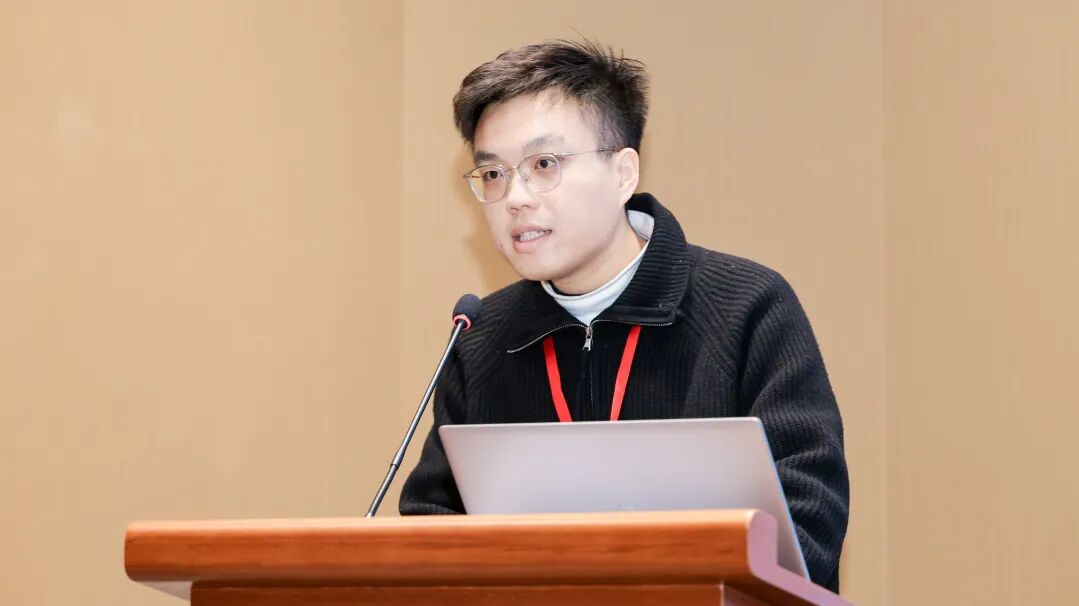
“I’m someone willing to be the first to try new things.”
When asked why he chose EIT while it was still under preparation, Qinglong Cao gave a straightforward answer. This consistent spirit of exploration ran through his entire PhD journey.
His research field, AI for Science, is itself a cutting‑edge interdisciplinary area. It aims to integrate human knowledge into AI models to tackle the challenges of scarce samples and high costs in scientific research.
He was selected for the PhD Program of the Young Talents Cultivation Project of the China Association for Science and Technology and won the National Scholarship for Doctoral Students. Within one year, he attended academic conferences in more than five countries. Such experience allowed him to engage constantly with top scholars worldwide and stay sharp on the technological frontiers.
During his PhD studies, Qinglong Cao witnessed the explosive growth of artificial intelligence. The continuous emergence of new technologies and paradigms honed his ability to learn quickly and adapt to changes, and further strengthened his commitment to his research direction.
After graduation, he will join Shanghai AI Laboratory as a Young Research Fellow to continue his in‑depth research in AI for Science. He strives to evolve AI from an “auxiliary research tool” into an “intelligent research partner” capable of discovering new knowledge.
Xu’an Gong
To be an educator who gazes at the stars while keeping feet firmly on the ground
PhD Research Focus:
Bio-inspired Flow Control
Next Destination:
Associate Professor, Jimei University
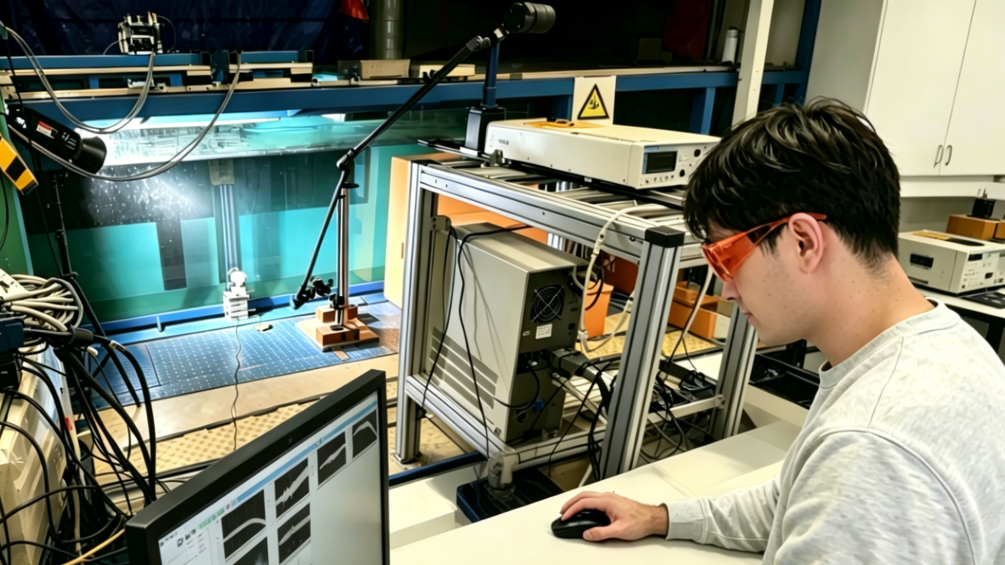
“Drawing inspiration from the coverts of birds, we designed a flexible serrated flow control structure, which can be mounted on wind turbine blades to boost output power and operational stability.”
When talking about his research, Xu’an Gong paints a vivid picture. Studying under Shiyi Chen, President of Eastern Institute of Technology and Member of the Chinese Academy of Sciences, he immersed himself in the frontiers of fluid mechanics. The experience of “preparing for months on end and repeatedly adjusting working condition parameters until the critical condition for mode transition was finally captured” gave him a deep understanding of the joys and hardships of scientific research.
At EIT, he not only built a solid theoretical foundation but also learned how to extract valuable scientific questions from industrial demands.
Now he has chosen to take up teaching at Jimei University.
This new role carries dual responsibilities. On one hand, as a guide, Xu’an Gong hopes to help students find research topics they truly love. On the other hand, as a companion, he wants to offer support and encouragement when they encounter difficulties and setbacks.
Moving forward, he will continue fundamental research closely aligned with industrial needs, delve into bio-inspired flow control technology, and promote its transition from laboratories to complex and variable marine environments.
“It is hard to persist along the long journey of scientific research without curiosity about the unknown world,” said Xu’an Gong. “My aspiration is to become an educator who gazes at the stars while keeping feet firmly on the ground.”
Wenyao Zhang
An explorer evolving from “task executor” to “problem definer”
PhD Research Focus:
Embodied Intelligence
Next Destination:
Research Fellow, Tencent
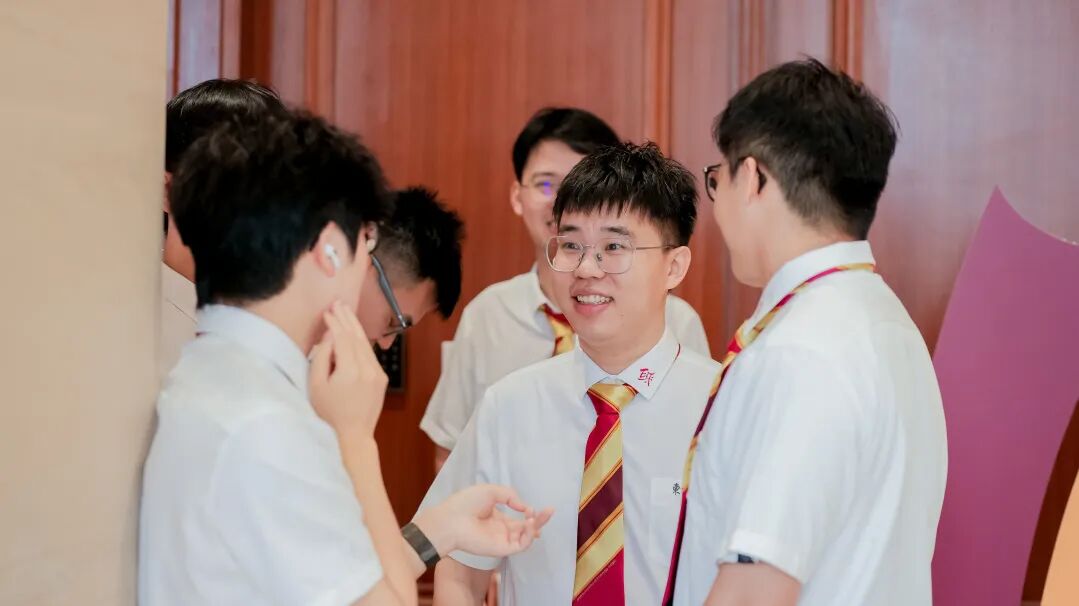
“The most important thing in pursuing a PhD is not to find a perfect research direction, but to build judgment through exploration.”
Enabling robots to truly understand and act in complex environments lies at the heart of embodied intelligence. Its core challenge resides not merely in perception, but in action. Wenyao Zhang’s PhD research addresses exactly this challenge. In a series of projects, he organically integrated Vision-Language-Action (VLA) models with World Models, offering a new technical pathway for robotic manipulation tasks.
“DreamVLA was not born from a sudden flash of inspiration. It took shape after repeated rethinking and reconstruction.” His greatest sense of achievement came from “the moment when long-term persistence finally unlocks the problem little by little.”
For Wenyao Zhang, choosing EIT meant opting for an environment that encourages exploration into “what constitutes important research questions”.
One ordinary academic discussion during his PhD left a deep impression on him. Faculty and students from diverse backgrounds engaged in intense debates over a single problem, with varied perspectives yet sincere focus. At that moment, he felt that young people here are genuinely encouraged to take part in high-level academic deliberation.
This atmosphere at EIT facilitated his transformation from a “task-executing” student into an independent researcher capable of “defining problems”.
As he embarks on his new journey, he will continue his exploration in embodied intelligence, aiming to produce “impactful and insightful research for the community”.
“Stay curious and embrace long-termism. Dare to raise questions, and dare to admit what you do not yet know,” said Wenyao Zhang. “This is the very training required to become an independent researcher.”
Qi Wang
Defining Undefined AI Problems
PhD Research Focus:
Model-based Reinforcement Learning
Next Destination:
Assistant Research Fellow, Institute of Automation, Chinese Academy of Sciences
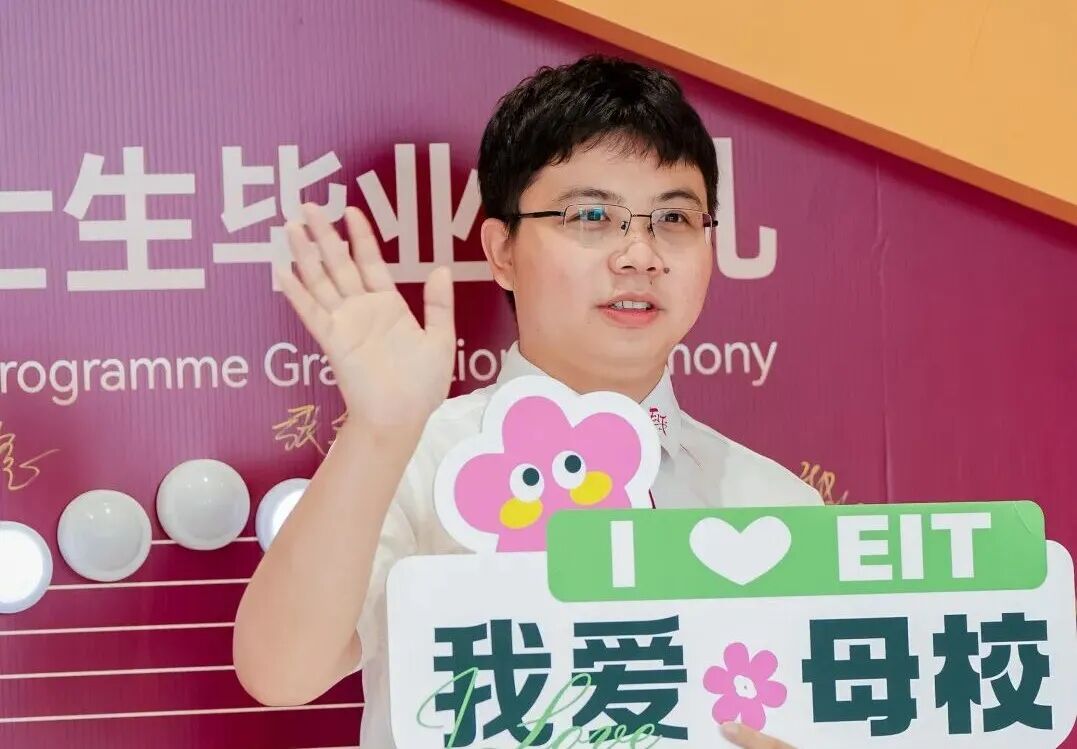
“Observation, reflection, disenchantment.” With these three words, Qi Wang sums up his PhD journey, revealing a calm mindset.
Enabling AI to learn how to interact with environments through “imagination”, instead of relying on massive real-world trial and error — this is the core theme of model‑based reinforcement learning, and the topic Qi Wang has delved into over four years.
He is deeply impressed by the flat communication culture at EIT. “Students can easily have close exchanges with top scholars. Professor Wenjun Zeng attends group meetings every week and discusses research ideas directly with students.”
During his PhD studies, the work co-authored by Qi Wang and his collaborators was accepted for oral presentation at ICLR 2025, a top-tier conference in machine learning. The project sought to enable reinforcement learning agents to look beyond immediate short-term rewards and make longer-term decisions via world models, bringing him a strong sense of accomplishment.
“In my PhD years, I learned to constantly reflect on the essence of different matters. Many seemingly unrelated things are essentially one and the same.”
This insight drives Qi Wang to go beyond merely solving known problems.
His next stop is the Institute of Automation, Chinese Academy of Sciences. Looking ahead, he hopes to “tackle some undefined AI problems”. In an era when everyone talks about AI, he reminds himself and future juniors to learn to “set your own evaluation metrics”.
Ye Liu
Empowering Real Industrial Scenarios with AI
PhD Research Focus:
AI and Industrial Simulation
Next Destination:
Algorithm Research Fellow, Simuverse Technology
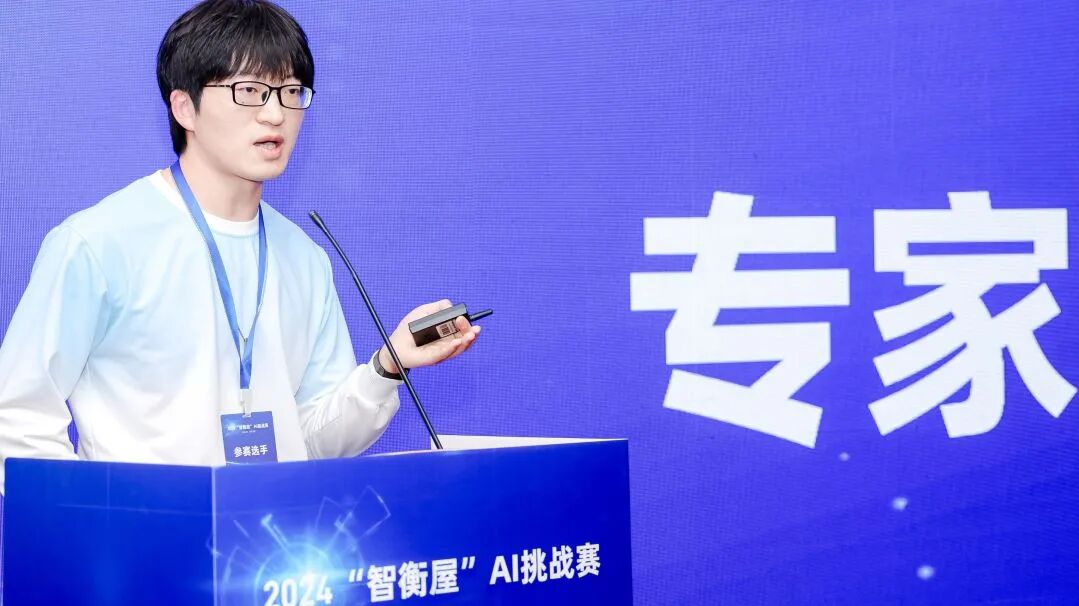
At first, I focused mostly on models, algorithms and experimental results. Now I pay more attention to whether a technology can form a complete system, achieve practical deployment and serve real engineering scenarios.
Ye Liu’s research centers on the integration of AI and industrial simulation, a typical interdisciplinary field. This aligns perfectly with EIT’s philosophy of valuing interdisciplinary convergence. His experience with dual supervisors and dual-campus training allowed him to receive rigorous academic training as well as industry-oriented guidance, saving him from being trapped in a single perspective.
During his PhD studies, Ye Liu led a team to develop an intelligent CAE agent software system for industry and successfully put it into real-world application. He confessed that this achievement brought him greater fulfillment than any single research paper. “It is not merely an output, but a truly operational system.”
After graduation, he will continue working on AI and intelligent industrial R&D. He aims to translate the CAE agent from a prototype into a stable, reliable industrial software platform. For him, the value of scientific research lies not only in publishing papers, but in genuinely addressing the pain points of industry.
“Forward-looking vision, courage for exploration and focus on real-world problems.” That is how Ye Liu interprets the spirit of EIT. Setting off from EIT’s laboratories, he hopes to carry this mindset to the vast frontlines of industry.
These are EIT’s first cohort of jointly trained PhD graduates. With diverse research directions, they all started their journey on the banks of the Yongjiang River.
Four years ago, they embarked on their academic pursuit at a university still under construction. Four years later, they carry EIT’s research foundation into the broader landscape of innovation. This is the most precious gift a new-type research-oriented university can offer its students, and also their greatest confidence to face uncertainties ahead. Their innovation stories have only just begun.